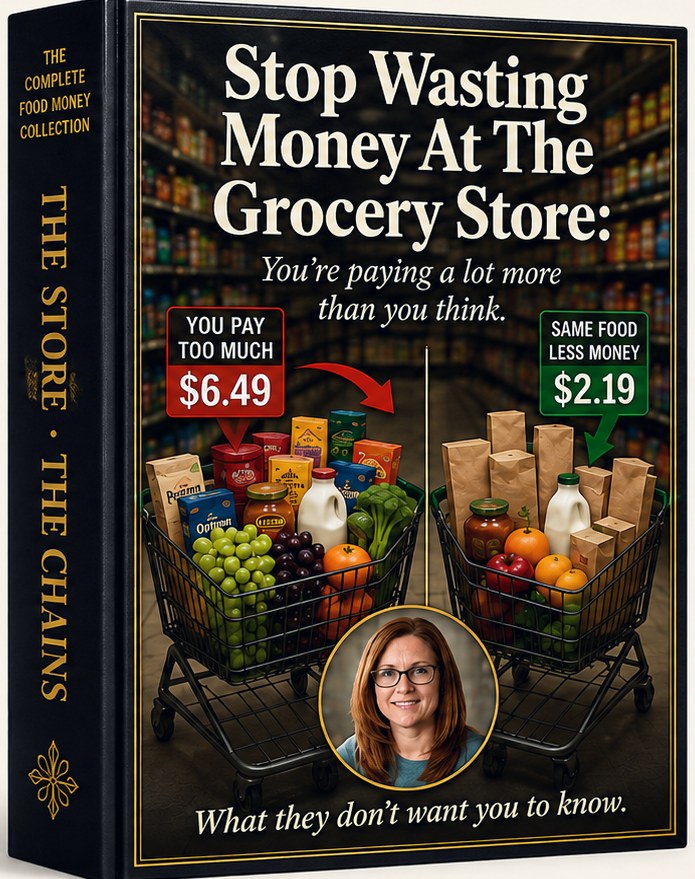
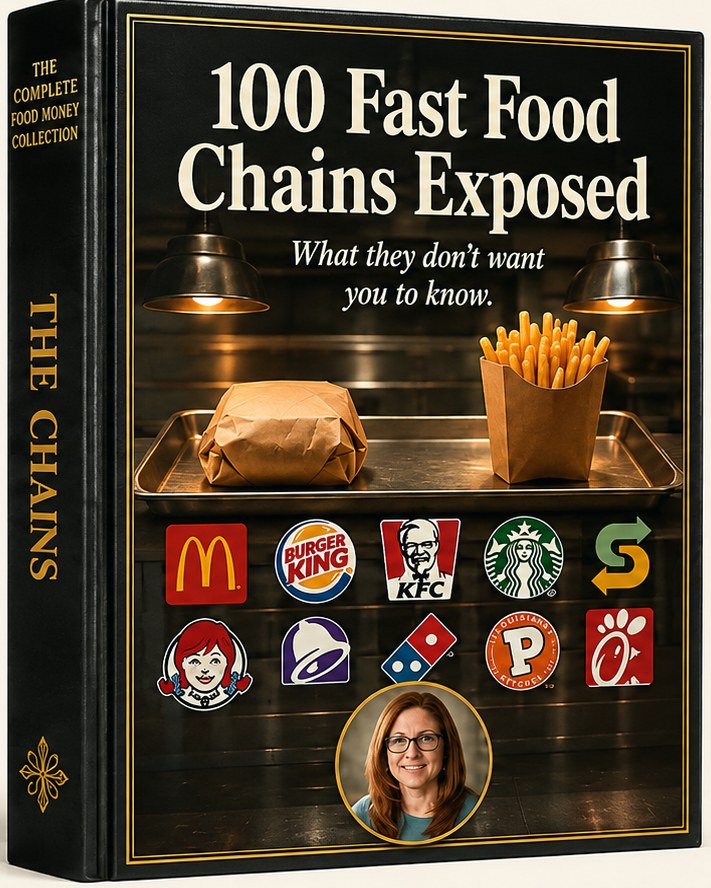
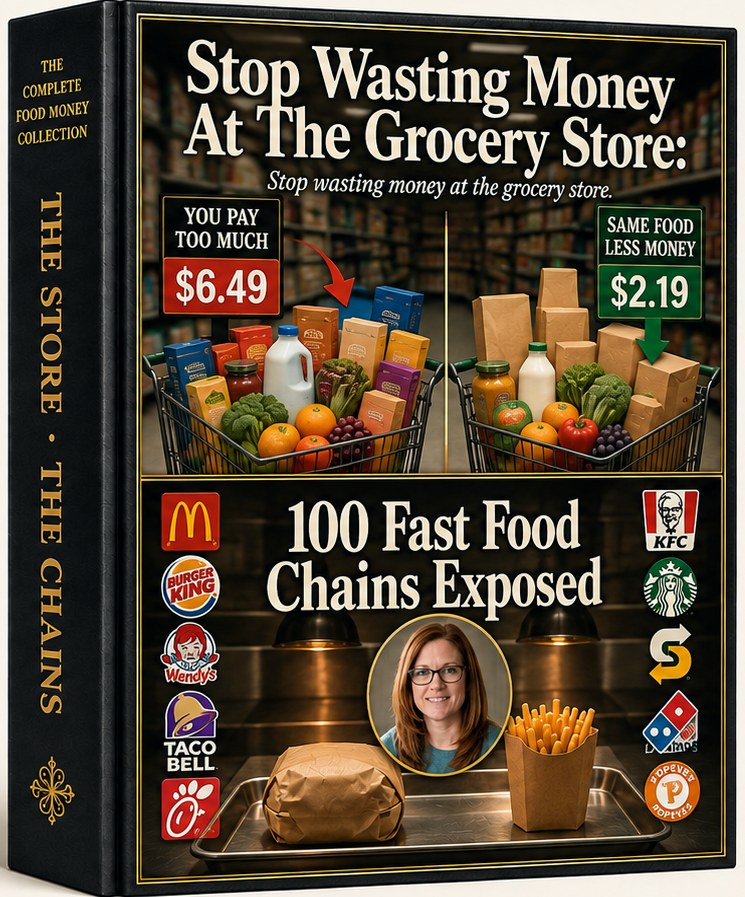
Two books from the buying side of the counter: what the package legally means, who actually makes the store brand, and what happens in the kitchen of a hundred fast food chains. Every claim sourced, so you can check me.

“I sat in the meetings where we looked at your shopping data and talked about how to move the average basket up by two dollars and forty cents.”
I spent twenty-two years deciding which products went on which shelf, at which height, at which price, and how much a manufacturer had to pay us for the privilege. I approved the endcaps. I set the promotional calendar. We were good at it — that is the part people do not want to hear.

In 2021 I left the trade and moved home to do my mother's shopping for eight months. She was on a fixed income. I sat at her kitchen table with her receipts and did the arithmetic on a woman who had been shopping the same way for fifty years.
I found nine thousand nine hundred dollars a year. Chapter 1 shows you the whole ledger before you read another page — ten lines, each one naming the chapters that produce it, so you can go and verify any of them against the actual method.
What the panel can hide and the front cannot. Unit price. Shrinkflation, tracked in ounces. Who really makes the store brand — and the forty items where it wins, and the twelve where it does not. The produce wall. The meat case and its sale cycle. Every egg carton claim decoded. And the $1,100 a year that goes straight into your bin.

For eleven of those twenty-two years I also ran our deli and hot-bar program. That half matters here, because a grocery hot bar and a fast food kitchen buy from the same place — the par-fried potatoes, the breaded chicken, the pre-portioned patties, the frozen biscuit dough, the sauce in the bag-in-box.
I bought all of it, from the same manufacturers, through the same broadline distributors, out of the same catalogues. When I describe the freezer-to-fryer pipeline, I am describing a supply chain I ordered from every week for over a decade.
What I am not is a restaurant operator, and I say so on page one. What I have is the public record: every chain with twenty or more locations must publish its nutrition information, every one has been inspected by a county health department, and those records are searchable. Chapter 11 teaches you to pull any of them in sixty seconds.
Nothing here asks you to eat differently. It asks you to buy the same food with better information.
Every chapter is built the same way: what the trouble is, the method written out step by step, and what it returns — in dollars where the return is money, plainly stated where it is not.
“I kept the price book for one month because I thought it was busywork. February came in $214 under January for the same meals. The unit price chapter alone paid for both books many times over.”
“What I appreciate is that she doesn't tell you everything is poison. She tells you what the label is allowed to hide, and then leaves you alone about it. I've never read a food book that respected me like that.”
“My teenagers eat fast food whatever I say. Now they pull up the inspection record on their phones in the parking lot. That is a better outcome than any lecture I had in me.”

I spent twenty-two years as a category buyer for a grocery chain in Ohio. That is not a glamorous job and I am not going to dress it up. What it means is that I decided which products went on which shelf, at which height, at which price, and how much a manufacturer had to pay us for the privilege.
Nobody in those rooms was twirling a mustache. They were decent people with mortgages, running a business that is legally required to make money, using tools that work extremely well on human beings who are tired at five-forty on a Tuesday.
I left in 2021. Not in protest, and I have no lawsuit to tell you about. I left because my mother got sick and I moved home. Two things I will not do in these books. I will not tell you what to eat — that is your business and I am not qualified to have an opinion about your body. And I will not tell you that everything on the shelf is poison. Most of it is not, and being wrong about that costs you money too.
When I name a company, I tell you exactly where the claim comes from — the ingredient panel, the recall record, or a court case with a docket number — so you can check me. That rule cost me a lot of the more entertaining chapters. It is also why you can trust the ones that are left.
Both books together, for less than one week of what the store quietly takes from you.
Everything in both books comes from material that is public: ingredient panels, published regulatory records, county health department inspections, FDA and CDC outbreak investigations, company press releases, and court dockets. Where I name a company, I say where the claim came from. Both books end with a sources section that tells you how to pull every category of it yourself.
That rule cost me the more entertaining chapters. It is also the reason the rest hold up.
A video shows you one thing. A book gives you the system underneath it — the price book, the unit-price method, the shelf life table, the hundred swaps, the directory of a hundred chains — laid out in order and printable, so you can run it in a real week instead of remembering something you saw once.
Because the books are only useful if the households that need them most can buy them, and those are the households already counting at the register. It is a digital edition: no printing, no shipping, no distributor taking a cut.
Each book is $27 on its own, so the two come to $54 bought separately. The collection is $27 for both — the same as buying one. That is deliberate. The second book costs me nothing to send you, and the two work better together: the first is about the money leaving your cart, the second about the money leaving your wallet at the window.
An illustrated PDF of each book, delivered immediately after checkout through Gumroad. They read on a phone, a tablet, a computer, or printed out on paper. Instant download · yours forever.
No, and I would be a hypocrite to ask. I eat it. I ate it in the car on the way home from the county records office while researching one of these chapters, and it was fine. This is a book about knowing what you are buying, not a book about virtue.
The prices are 2026 US figures, rounded, and the inspection-record systems described are American. The mechanisms are not: unit pricing, shrinkflation, store-brand manufacturing, endcap economics, holding cabinets and fryer oil work the same way wherever you shop. Expect the methods to transfer and the dollar figures not to.
The prices will drift, and I say so on the first page of both. The methods will not. Chapter 8 — unit pricing — sits underneath about a third of the first book, and it will be just as true in ten years. Where a figure matters, the sources pages tell you how to check the current one yourself.
Both books — 358 pages, 113 chapters, a hundred chains on the record — for $27 together, instead of $54 bought one at a time.
Get The Complete Food Money Collection — $47 $27